
Solutions to Common Misunderstandings in Motor Energy-Saving Retrofits for High-Energy-Consuming Enterprises
Enterprises need to conduct a comprehensive assessment of the motor system before retrofitting, which can be achieved through three steps:
Data Collection: Collaborate with professional teams or energy service companies to test actual operating parameters of the motor, such as power, current, and voltage. Record load variation patterns (e.g., daily fluctuations, seasonal differences).
Precise Selection: Select motors suited to the load characteristics. For example:
For equipment where the load rate remains consistently around 80%, choose high-efficiency motors with a rated power slightly higher than the load.
For equipment with significant load fluctuations, prioritize variable frequency speed control motors.
System Optimization: Optimize the connection method between the motor and equipment, considering the efficiency of transmission components (e.g., gearboxes, couplings), to reduce transmission losses. If technical capability is insufficient, commission motor manufacturers or third-party organizations to develop the retrofit plan, ensuring overall system efficiency.

(II) Scientific Application of Variable Frequency Drive (VFD) Technology
When deciding whether to use VFD technology, enterprises should conduct the "Three Assessments":
Operational Condition Assessment: Analyze whether the equipment requires speed regulation (e.g., does a fan need to adjust air volume based on room temperature?), the speed regulation range (range of speed variation), and the frequency (number of speed adjustments per day). Apply VFD technology only to equipment requiring dynamic adjustment.
Economic Assessment: Calculate the payback period for the VFD system (Payback Period = Initial Investment ÷ Annual Energy Saving). If the payback period exceeds the equipment's expected lifespan, its adoption is not recommended.
Compatibility Assessment: Select a VFD compatible with the motor (e.g., explosion-proof VFDs for hazardous areas) and install filtering devices to reduce harmonic interference, ensuring stable system operation.
Enterprises should shift their focus from "short-term investment" to "long-term return," focusing on three aspects:
Total Cost of Ownership Calculation: Calculate the total cost over the equipment's entire lifecycle (Procurement Cost + Operating Electricity Cost + Maintenance Cost + Residual Value), rather than focusing solely on the purchase price.
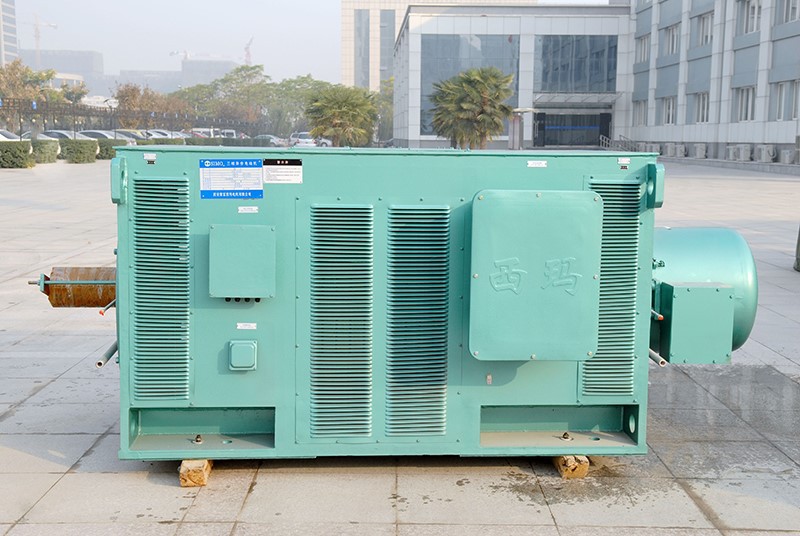
Example: For a 400kW high-voltage motor, a Grade 1 efficiency (YE5) model might have a 4% higher procurement cost compared to a Grade 3 efficiency (YE3) model, but its efficiency is 1.51% higher. Assuming 8,000 operating hours per year and an electricity rate of 0.6 RMB/kWh, the annual electricity savings would be approximately: 400 kW × 1.51% × 8,000 h × 0.6 RMB/kWh = 29,000 RMB. The price difference is recovered in about two years.
Quantifying All Benefits: Beyond electricity savings, also calculate the production gains from improved equipment efficiency (e.g., stable motor speed increasing product qualification rates) and the reduction in maintenance costs (e.g., lower failure rates of high-efficiency motors reducing repair frequency) and other hidden benefits.
Third-Party Verification: Commission professional organizations to evaluate the economics of different options to avoid decision-making biases due to information asymmetry.