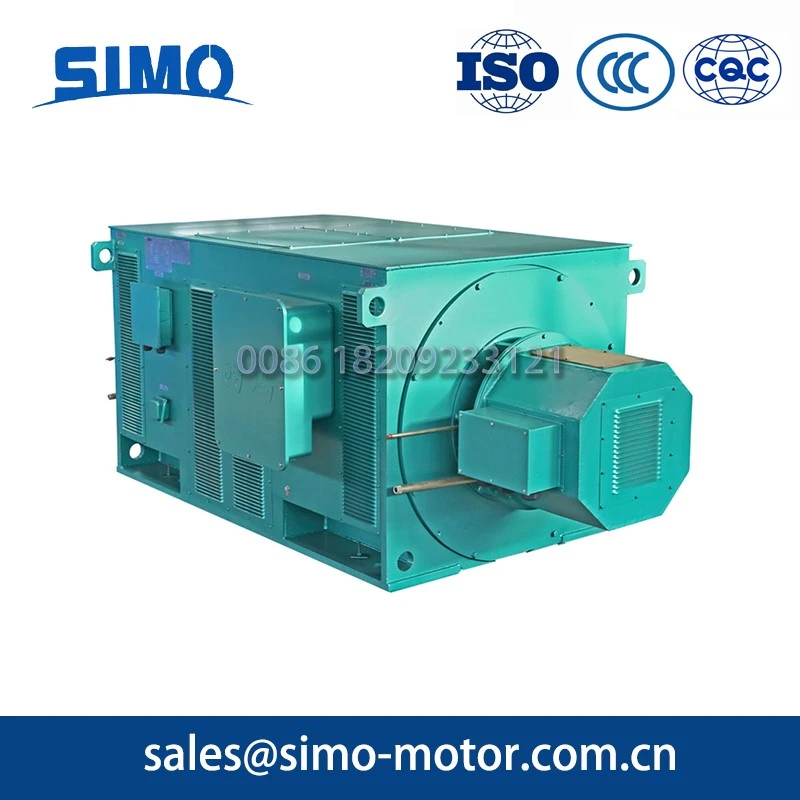

The Importance of End Winding Tying in Motor Windings
1.Whether it's the stator or rotor windings, and regardless of whether they are soft or hard windings, the end parts must undergo necessary tying during the manufacturing process.
2.The purpose of tying is to ensure the relative positions between windings, windings and insulation, and windings and associated components remain unchanged, while also enhancing the curing effect after impregnation and baking.
3.Heat-shrinkable insulating binding tape or tying rope is typically used during winding tying to ensure the end parts form a relatively solid whole after impregnation and baking.
4.An appropriate tightening force must be applied during the tying process.
5.Regarding the tying and securing of leads, it is essential to ensure that the leads do not move arbitrarily after tying while also preventing the connection between the leads and the main winding from being strained during subsequent processing.
6.The tying of winding ends must be standardized and not merely a superficial wrapping.
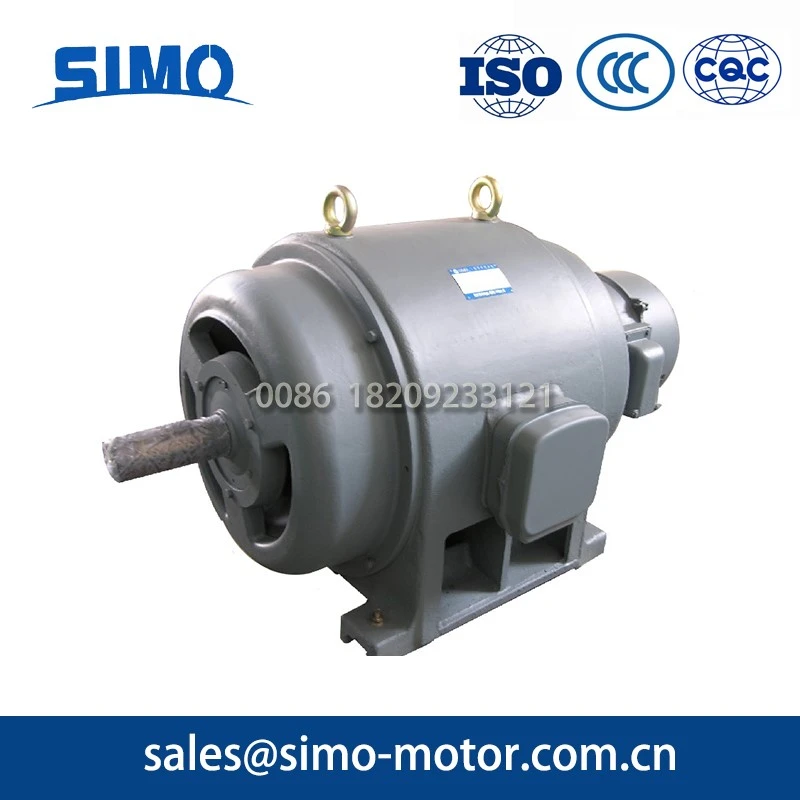
1.Since motor windings have both in-phase and out-of-phase components, mutual attraction and repulsion forces arise between adjacent coil bars at the ends. To prevent displacement caused by these forces, the ends must be properly secured. A polyester rope with a thickness matching the gap size should be tightly tied between the side gaps of adjacent coil bars.
2.High-voltage motor stators often use the vacuum pressure impregnation (VPI) process. The insulation structure involves wrapping coils with mica tape, tying the coil ends with polyester-glass ropes, and securing the coils to the end rings with ropes under controlled tension. However, excessive tightness should be avoided to prevent insulation damage at contact points, which could degrade insulation performance.
3.When coils are heated and inserted according to process requirements, the insulation at the nose ends of the coils may soften, leading to insulation damage and reduced service life.
4.High-speed motor stator windings typically have long end portions and large flared openings.
5.A 4–5 mm thick polyester felt can be flat-wrapped over the end ring insulation to act as a cushion between the coils. Due to its softness and compressibility, the felt prevents the coil insulation from being compressed by the end ring during tying while increasing the contact area. This ensures tight contact between the coils and the end ring, improving radial and tangential fixation of the ends after resin impregnation and curing.