


Summary of the Working Principle of Xi'an Simo AC Motor
1. Core Principle
Xi'an Simo AC motors operate based on Faraday's law of electromagnetic induction, converting AC electrical energy into mechanical energy. The core process involves:
Stator Windings: Three-phase AC power supplied to the stator windings generates a rotating magnetic field.
Rotor Conductors: The rotor conductors cut through the magnetic field lines, inducing an electric current.
Electromagnetic Torque: The interaction between the rotor current and the magnetic field produces electromagnetic torque, which drives the rotor to rotate.

2. Induction Motor (Asynchronous Motor) Working Principle
Rotating Magnetic Field of Stator:
A three-phase AC supply with a phase difference of 120°is fed into the stator windings, creating a resultant rotating magnetic field. The synchronous speed n1 is determined by the formula n1=60f/p,where f is the supply frequency and p is the number of pole pairs.
Example: For a supply frequency of 50 Hz and p=2 , the synchronous speed n1 is 1500 r/min.
Induced Current and Torque in the Rotor:
The rotor conductors cutting through the rotating magnetic field induce an electromotive force (EMF) and current in a closed loop.
The interaction between this induced current and the magnetic field produces electromagnetic torque, causing the rotor to rotate at speed n ,where n<n1(asynchronous characteristic).
Slip Ratio: S=(n1-n)/n1, used to measure the speed difference.
3. Synchronous Motor Working Principle
Rotating Magnetic Field of Stator:
Similar to asynchronous motors, three-phase AC power supplied to the stator windings generates a rotating magnetic field. The synchronous speed n1 is calculated using the same formula n1=60f/p
Rotor Excitation and Synchronous Operation:
The rotor is excited by DC current to form a constant magnetic field (N/S poles).
The stator's rotating magnetic field and the rotor's magnetic field poles attract each other, forcing the rotor to rotate at the synchronous speed n1(where n=n1), maintaining a constant speed.
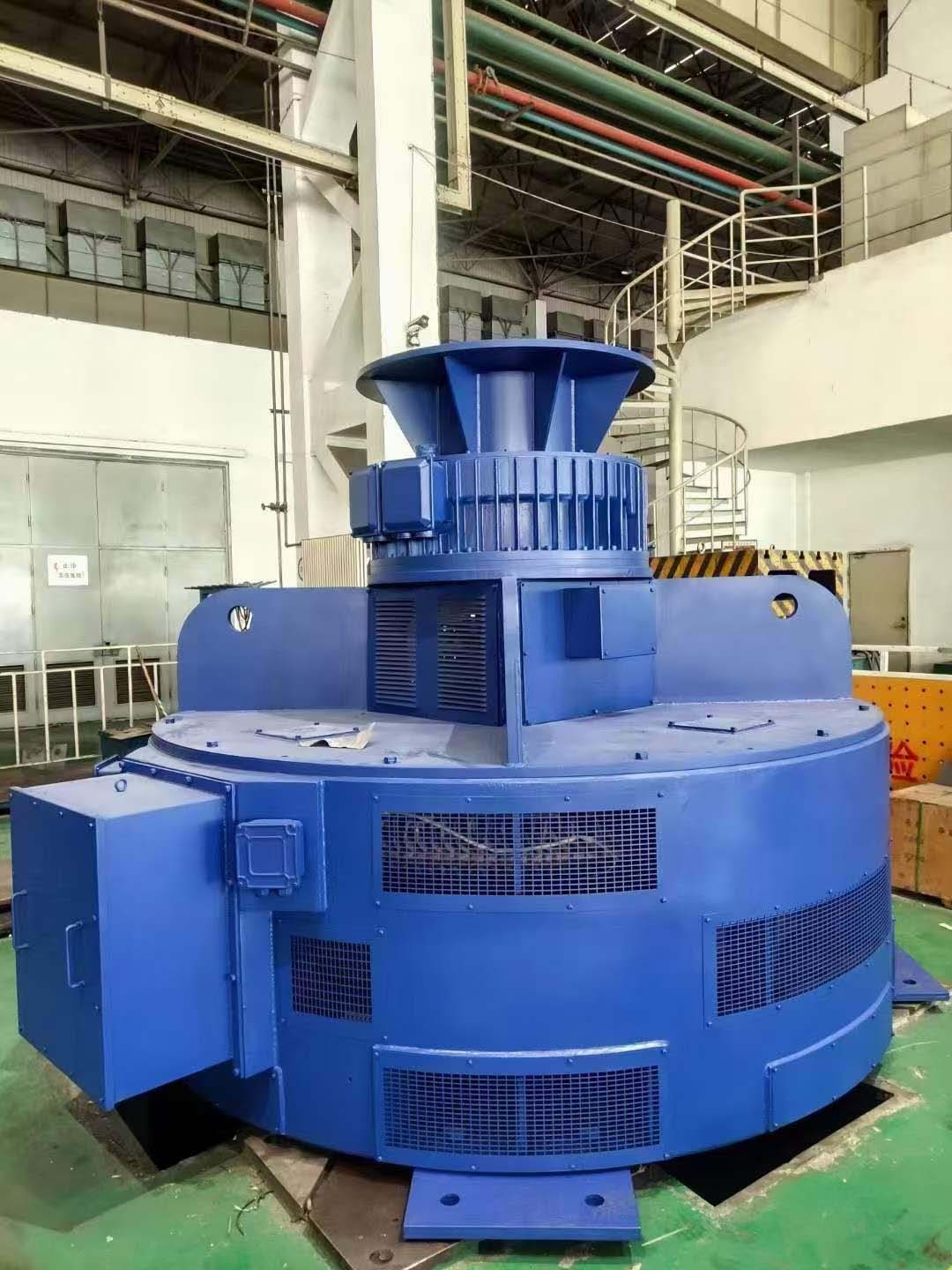
4. Application Advantages
Simple Structure: No direct contact between the stator and rotor, ensuring high reliability.
High Efficiency and Energy Saving: High efficiency in energy conversion (up to over 90%).
Flexible Speed Control: Achieved through methods like variable frequency drives and adjusting rotor resistance for wide-range speed control.
Wide Applications: Used in industrial equipment, home appliances, aerospace, and more.
5. Comparison Between Asynchronous and Synchronous Motors
|
Characteristics |
Asynchronous Motor |
Synchronous Motor |
|
Speed |
n < n_1 (slip exists) |
n = n_1 (strictly synchronized) |
|
Excitation Method |
Self-excitation by induced current |
External excitation by DC current |
|
Speed Control Performance |
Requires external speed control devices |
Direct speed control via frequency variation |
|
Application Scenarios |
Fans, pumps, home appliances |
High-precision equipment, grid frequency regulation |