

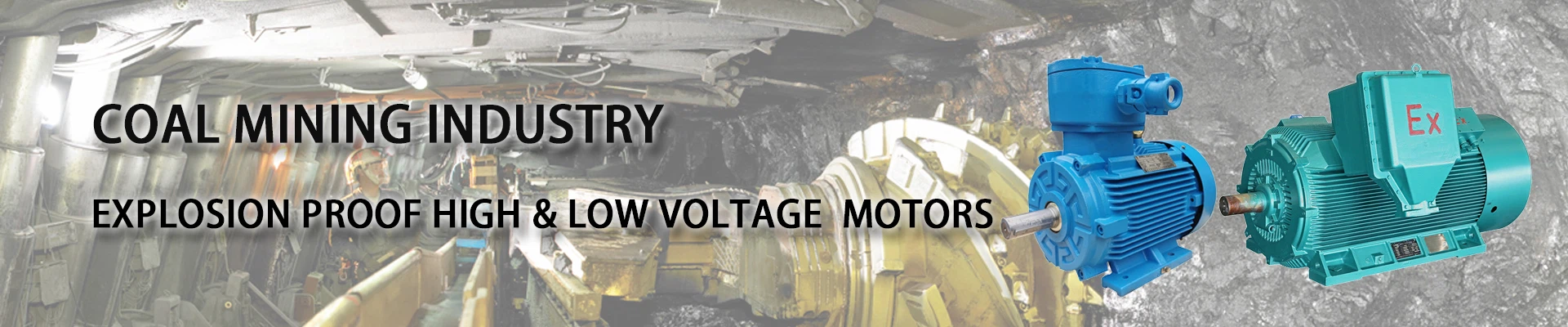
The selection and application of bearings for three-phase induction motors are crucial to ensure efficient operation and extend the lifespan of the motor. Below is a detailed guide on bearing selection and application:
I. Bearing Type Selection
Deep Groove Ball Bearings (6000 Series)
Features : Simple structure, low friction, suitable for high-speed rotation.
Applications : Light to medium loads, high speeds (e.g., small motors, fans).
Examples : Models 6310, 6205.
Cylindrical Roller Bearings (NU/NJ Series)
Features : High load-carrying capacity, can handle significant radial loads but sensitive to axial loads.
Applications : Medium to heavy loads, medium to low speeds (e.g., industrial pumps, compressors).
Examples : Models NU310, NJ206.
Angular Contact Ball Bearings (7000 Series)
Features : Can simultaneously bear radial and axial loads; must be used in pairs to balance axial forces.
Applications : Bidirectional axial positioning or higher axial loads (e.g., machine tool spindles).
Examples : Models 7310B, 7206C.
Spherical Roller Bearings (20000 Series)
Features : Self-aligning, adaptable to misalignment between shaft and bearing housing, with extremely high load-carrying capacity.
Applications : Heavy loads, vibration, or poor alignment conditions (e.g., mining machinery).
Examples : Models 22210, 22312.
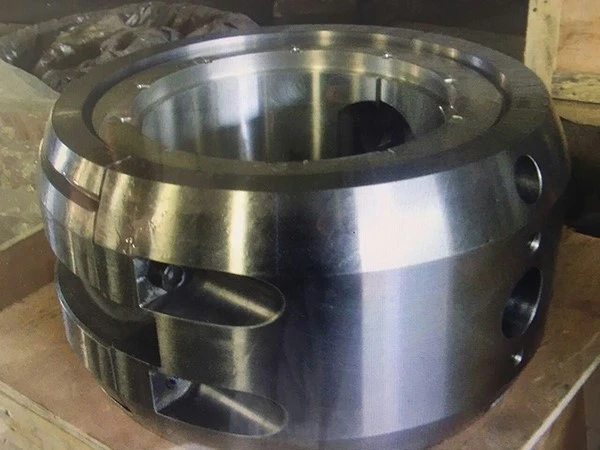
II. Key Parameters for Selection
Load Characteristics
Radial Load : Prefer deep groove ball bearings or cylindrical roller bearings.
Axial Load : If primarily axial, choose angular contact ball bearings or tapered roller bearings.
Combined Load : Angular contact ball bearings or spherical roller bearings.
Speed Requirements
High Speed (>3000 rpm) : Deep groove ball bearings (higher speed limits).
Medium to Low Speed : Cylindrical roller bearings or spherical roller bearings.
Working Environment
Temperature : For high temperatures, select heat-resistant materials (e.g., ceramic bearings or special steels).
Pollution : In dusty environments, choose sealed bearings (e.g., those with 2RS suffix for dust covers).
Corrosion : In chemical environments, choose stainless steel bearings (e.g., 440C material).
Lubrication Method
Grease Lubrication : General purpose, longer maintenance intervals (e.g., SKF LGHP2 grease).
Oil Lubrication : For high-speed or high-temperature applications (requires regular oil replenishment).
III. Installation and Maintenance
Installation Points
Tolerance Fit : Inner ring and shaft should have an interference fit (commonly k6/m6), outer ring and housing should have a clearance fit (H7).
Tool Selection : Use hydraulic or heating methods for installation, avoid direct hammering.
Alignment Check : Measure the coaxiality of the shaft and bearing housing after installation (error ≤ 0.05mm).
Lubrication Management
Initial Lubrication : Fill 1/3 to 1/2 of the bearing space with lubricant (excess can cause overheating).
Relubrication Cycle : Adjust based on operating time or vibration monitoring (generally every 3 to 6 months).
Grease Compatibility : Avoid mixing different brands of lubricants (may cause chemical reactions).
Fault Diagnosis
Overheating (>80°C) : Check for insufficient lubrication, overload, or misalignment.
Abnormal Noise : May indicate raceway wear, contamination, or cage damage.
Vibration Abnormalities : Need to stop and check bearing clearance or replace failed bearings.
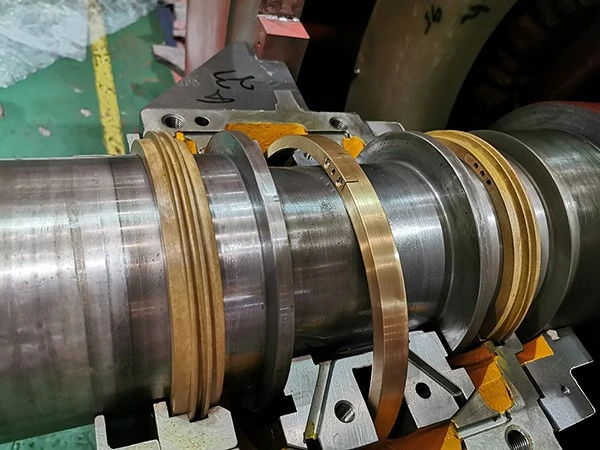
IV. Typical Application Cases
Fan Motors
Selection : Deep groove ball bearings (e.g., 6312), suitable for high-speed and light loads.
Maintenance : Inspect grease condition quarterly and clean fan duct dust.
Pump Motors
Selection : Combination of cylindrical roller bearings (NU310) and angular contact ball bearings (7310B) to balance radial and axial forces.
Protection : Install mechanical seals to prevent fluid ingress.
Mining Equipment Motors
Selection : Spherical roller bearings (22216), resistant to impact and vibration.
Lubrication : Use extreme pressure lithium-based grease (e.g., Mobilith SHC 460).
V. Summary
Selection Principles : Match bearing type and parameters comprehensively based on load, speed, and environment.
Safety Redundancy : For heavy loads or frequent start-stop conditions, consider increasing the bearing load rating (e.g., C3 clearance).
Standard Operation : Strictly follow installation manuals, regularly monitor temperature and vibration, and avoid premature failure due to human error.